AZINCOURT
Bernard Cornwell
Azincourt (or Agincourt) is apparently one of the most famous battles in English history, but having no knowledge of the pre-Tudor era I had no idea what to expect. Yet Bernard Cornwell tells us about the famous battle only in the last 1/3 of the novel, instead focusing on the story of English archer Nicholas Hook and how he came to be part of la malheureuse journee ("the unfortunate day") for France on Saint Crispin's Day, 25 October 1415.
Cornwell has Hook hearing the
voices of Saint Crispin and Saint Crispinian and guiding him, but I think this was underutilized in the development of his character. I felt no connection with him or any of the characters in the novel because despite the horrors they experienced, they still lacked depth.
Cornwell's descriptions of the siege of the port town of Harfleur and the Battle of Azincourt that followed were well-written. I never realized the strength and the importance of archers in battle. To give one an idea why Azincourt became legendary, here is an illustration of the battlefield (from The New York Times) -
However, I would have appreciated more information about the history of the enmity between England and France, and about the king who brought the Englishmen and Welshmen to war, Henry V.
Rating:
Showing posts with label book review. Show all posts
Tuesday, March 12, 2013
Tuesday, February 19, 2013
book review: "The Sunne in Splendour" by Sharon Kay Penman
"THE SUNNE IN SPLENDOUR"
Sharon Kay Penman
News of the discovery of Richard III's remains under a car park in Leicester, England prompted me to finally read this hefty novel.
Richard III is infamous as the king who had his brother Edward IV's son and successor Edward V and other son Richard, popularly known as the Princes in the Tower, killed while imprisoned in the Tower of London. He is the last king of England to have died in battle, in Bosworth Field in 1485, and the last Plantagenet king, after which the Tudor dynasty reigned.
I first read about Richard III in "The Daughter of Time" by Josephine Tey about 5 years ago, and was intrigued by the story of Richard and his nephews. Did he, or did he not, order their murder?
In this novel, as in "The Daughter of Time", the author tries to make a case for Richard III. She chronicles his life and the life of his brother Edward IV, that of their family the House of York, and of their friends and supporters during the Wars of the Roses. Penman also shows us the other side of the coin, the House of Lancaster of Henry VI.
My thought throughout the novel was, "George R.R. Martin's A Song of Ice and Fire has nothing to this!" It really happened; rebellions and factions and betrayals... I wonder if the Wars of the Roses inspired GRRM. Like ASoIaF, it was difficult to keep track of the characters at first, all the Edwards and Richards and Henrys and Elizabeths and Annes, that I had to look for a family tree online.
Having no previous knowledge of English history and not having read the play by William Shakespeare, my sympathy lies with Richard III. But I admit that these historical novels were written against popular belief, so I aim to read a non-fiction account, "The Princes in the Tower" by Alison Weir, in future.
For now, I remain loyal to the Whyte Boar of Gloucester.
Rating:
Sharon Kay Penman
News of the discovery of Richard III's remains under a car park in Leicester, England prompted me to finally read this hefty novel.
Richard III is infamous as the king who had his brother Edward IV's son and successor Edward V and other son Richard, popularly known as the Princes in the Tower, killed while imprisoned in the Tower of London. He is the last king of England to have died in battle, in Bosworth Field in 1485, and the last Plantagenet king, after which the Tudor dynasty reigned.
I first read about Richard III in "The Daughter of Time" by Josephine Tey about 5 years ago, and was intrigued by the story of Richard and his nephews. Did he, or did he not, order their murder?
In this novel, as in "The Daughter of Time", the author tries to make a case for Richard III. She chronicles his life and the life of his brother Edward IV, that of their family the House of York, and of their friends and supporters during the Wars of the Roses. Penman also shows us the other side of the coin, the House of Lancaster of Henry VI.
My thought throughout the novel was, "George R.R. Martin's A Song of Ice and Fire has nothing to this!" It really happened; rebellions and factions and betrayals... I wonder if the Wars of the Roses inspired GRRM. Like ASoIaF, it was difficult to keep track of the characters at first, all the Edwards and Richards and Henrys and Elizabeths and Annes, that I had to look for a family tree online.
Having no previous knowledge of English history and not having read the play by William Shakespeare, my sympathy lies with Richard III. But I admit that these historical novels were written against popular belief, so I aim to read a non-fiction account, "The Princes in the Tower" by Alison Weir, in future.
For now, I remain loyal to the Whyte Boar of Gloucester.
Rating:
Monday, January 14, 2013
book review: "Blackout" & "All Clear" by Connie Willis
BLACKOUT & ALL CLEAR
The latest addition to Connie Willis' Oxford Time Travel series, which includes "Doomsday Book" and "To Say Nothing of the Dog", "Blackout" and "All Clear" document the stories of historians Polly Churchill, Merope Ward, and Michael Davies. Polly, Merope, and Michael each travel back in time from Oxford in the year 2060 to different periods of World War II Britain to do research, but their lives intertwine when their means of returning to the future does not work, and they are stuck in the past trying to find a way back.
At a total of almost 1,200 pages, not a few readers have found the two novels too lengthy. Indeed, the story was intended to be one novel that was eventually split into two volumes. This means that before starting on "Blackout", one must be prepared to read "All Clear" afterwards, to be able to appreciate the story fully. The fact that the novels jump from one character to another and from one time period to the next also adds to the challenge.
Instead of bogging down the story, I think the novels are richer for the wealth of information they impart about the daily lives of ordinary people in wartime England. This is especially true for people like me whose education, by virtue of place of residence, focused on the Pacific Theater of the Second World War. Part of the appeal of the novels for me too, is trying to figure out the connections between the people who enter the lives of Polly and Merope and Michael, and the events that surround them. The story would be different, I think, were such details left out.
A good story for me is one which has characters who stay with me even after I've closed the book, and one that makes me think; in this case, about the complexities and paradoxes of time travel, which I will leave to readers brave enough and patient enough to tackle the novels, to figure out (to avoid spoilers). More than the above, "Blackout" and "All Clear" are Connie Willis' love letters to the men and women who lived and survived World War II; the soldiers who fought the war, and the loved ones they left behind.
Rating:
Connie Willis
The latest addition to Connie Willis' Oxford Time Travel series, which includes "Doomsday Book" and "To Say Nothing of the Dog", "Blackout" and "All Clear" document the stories of historians Polly Churchill, Merope Ward, and Michael Davies. Polly, Merope, and Michael each travel back in time from Oxford in the year 2060 to different periods of World War II Britain to do research, but their lives intertwine when their means of returning to the future does not work, and they are stuck in the past trying to find a way back.
At a total of almost 1,200 pages, not a few readers have found the two novels too lengthy. Indeed, the story was intended to be one novel that was eventually split into two volumes. This means that before starting on "Blackout", one must be prepared to read "All Clear" afterwards, to be able to appreciate the story fully. The fact that the novels jump from one character to another and from one time period to the next also adds to the challenge.
Instead of bogging down the story, I think the novels are richer for the wealth of information they impart about the daily lives of ordinary people in wartime England. This is especially true for people like me whose education, by virtue of place of residence, focused on the Pacific Theater of the Second World War. Part of the appeal of the novels for me too, is trying to figure out the connections between the people who enter the lives of Polly and Merope and Michael, and the events that surround them. The story would be different, I think, were such details left out.
A good story for me is one which has characters who stay with me even after I've closed the book, and one that makes me think; in this case, about the complexities and paradoxes of time travel, which I will leave to readers brave enough and patient enough to tackle the novels, to figure out (to avoid spoilers). More than the above, "Blackout" and "All Clear" are Connie Willis' love letters to the men and women who lived and survived World War II; the soldiers who fought the war, and the loved ones they left behind.
Rating:
Sunday, August 05, 2012
book review: "I Killed Adolf Hitler" by Jason
I KILLED ADOLF HITLER
Jason
In a world where anyone can hire an
assassin and killing people in public is commonplace, what happens when
someone is commissioned to travel in time and eliminate Adolf Hitler?
The anthropomorphic animals and the violence may be unsettling to some, but Jason (pseudonym of Norwegian comic book artist John Arne Sæterøy) manages to tell a thought-provoking story about morality and love in less than 50 pages without spoon-feeding it to the reader. Well-deserving of the Eisner Award it received in 2008 for Best US Edition of International Material.
Rating:
Jason
In a world where anyone can hire an
assassin and killing people in public is commonplace, what happens when
someone is commissioned to travel in time and eliminate Adolf Hitler?The anthropomorphic animals and the violence may be unsettling to some, but Jason (pseudonym of Norwegian comic book artist John Arne Sæterøy) manages to tell a thought-provoking story about morality and love in less than 50 pages without spoon-feeding it to the reader. Well-deserving of the Eisner Award it received in 2008 for Best US Edition of International Material.
Rating:
Tuesday, May 15, 2012
book review: "The Guernsey Literary and Potato Peel Pie Society" by Mary Ann Shaffer and Annie Barrows
THE GUERNSEY LITERARY AND POTATO PEEL PIE SOCIETY
Mary Ann Shaffer and Annie Barrows
I have seen this novel a couple of times at my favorite secondhand
bookstore, but what finally made me buy a copy were the recommendations
from members of The Historical Fiction Group at Shelfari.
Trying to rebuild their lives after the Second World War, writer Juliet Ashton receives a letter from farmer Dawsey Adams, who lives on the island of Guernsey in the English Channel, asking her to recommend a book seller who would send him Charles Lamb's works. Thus begins the correspondence between Juliet and the other members of The Guernsey Literary and Potato Peel Society, and other characters that inhabit Juliet's life in London and Dawsey's life in Guernsey.
I finished the book in an afternoon, stopping near the end for a cup of tea and a tuna sandwich (I dislike cucumbers) to savor the book longer. I was charmed by Guernsey and its people. Each character's personality comes across in the letters he or she writes, making me mourn the disappearing art of letter-writing in this age of the internet. I especially empathize with Juliet, who at the age of 32 has mostly resigned herself to living a solitary life with her writing and her books, breaking off her engagement with a man who would dare empty her bookshelves and pack her books in boxes.
The story wanders, although Juliet remains the center, but that's how life happens; one can't impose order on it. Still, the novel affirms the fact that sometimes it is not the book that matters, but the company of people who enjoy books and reading as much as one does.
Rating:
Mary Ann Shaffer and Annie Barrows
I have seen this novel a couple of times at my favorite secondhand
bookstore, but what finally made me buy a copy were the recommendations
from members of The Historical Fiction Group at Shelfari.Trying to rebuild their lives after the Second World War, writer Juliet Ashton receives a letter from farmer Dawsey Adams, who lives on the island of Guernsey in the English Channel, asking her to recommend a book seller who would send him Charles Lamb's works. Thus begins the correspondence between Juliet and the other members of The Guernsey Literary and Potato Peel Society, and other characters that inhabit Juliet's life in London and Dawsey's life in Guernsey.
I finished the book in an afternoon, stopping near the end for a cup of tea and a tuna sandwich (I dislike cucumbers) to savor the book longer. I was charmed by Guernsey and its people. Each character's personality comes across in the letters he or she writes, making me mourn the disappearing art of letter-writing in this age of the internet. I especially empathize with Juliet, who at the age of 32 has mostly resigned herself to living a solitary life with her writing and her books, breaking off her engagement with a man who would dare empty her bookshelves and pack her books in boxes.
The story wanders, although Juliet remains the center, but that's how life happens; one can't impose order on it. Still, the novel affirms the fact that sometimes it is not the book that matters, but the company of people who enjoy books and reading as much as one does.
Rating:
Friday, May 04, 2012
book review: "The Fault in Our Stars" by John Green
THE FAULT IN OUR STARS
John Green
Have you ever read a book you had difficulty trying to tell other people
about, because you feel that your words are inadequate to describe what
the book meant to you, and you're afraid that your attempt might
diminish its meaning, and afraid you would not be understood? "The Fault
in Our Stars" is such a book. To say that it is about a girl with
cancer who falls in love with a boy who also has cancer, and their
experience living with cancer, is a simplification; It cannot convey the
depths of a life aware of its nearing death, and its impact not only on
the way that life is lived but also its impact on the lives around it.
I would recommend this book not only to people who have cancer or people who know people who have cancer, but also people who have a long-term illness and those who know them, and people who have had experience with death, which is all of us.
Rating:
John Green
Have you ever read a book you had difficulty trying to tell other people
about, because you feel that your words are inadequate to describe what
the book meant to you, and you're afraid that your attempt might
diminish its meaning, and afraid you would not be understood? "The Fault
in Our Stars" is such a book. To say that it is about a girl with
cancer who falls in love with a boy who also has cancer, and their
experience living with cancer, is a simplification; It cannot convey the
depths of a life aware of its nearing death, and its impact not only on
the way that life is lived but also its impact on the lives around it.I would recommend this book not only to people who have cancer or people who know people who have cancer, but also people who have a long-term illness and those who know them, and people who have had experience with death, which is all of us.
Rating:
Wednesday, April 18, 2012
book review: "Lincoln's Dreams" by Connie Willis
LINCOLN'S DREAMS
Connie Willis
While doing research on Abraham Lincoln and his prophetic dreams, Jeff
meets Annie, herself experiencing the Civil War in sleep, and tries to
help her find meaning to her dreams.
I know next to nothing about the American Civil War, but it did not hinder me from enjoying Connie Willis' "Lincoln's Dreams". Annie's experience was gripping, and the story relevant.
We are conditioned to look up to our heroes on their pedestals, but we need to remember that they were human too. Even though they inspire us by their courage and with their triumphs, they also suffered loss and failure.
Jeff, turning down a job opportunity on studying the effects of the Vietnam War, says, "I haven't figured out the long-term effects of the Civil War yet." It seems that mankind has not even recovered from one war before he becomes involved in another. In the last century alone, we had World War I, World War II, Korea, Vietnam, and Iraq, with Afghanistan at the start of this century. Does no one understand that war does not solve anything? It is a waste of human lives and material resources. War does not resolve conflict, it only postpones it until the "losing" side musters strength to fight again. Which is a lesson mankind, sadly, seems slow to learn.
Rating:
Connie Willis
While doing research on Abraham Lincoln and his prophetic dreams, Jeff
meets Annie, herself experiencing the Civil War in sleep, and tries to
help her find meaning to her dreams.I know next to nothing about the American Civil War, but it did not hinder me from enjoying Connie Willis' "Lincoln's Dreams". Annie's experience was gripping, and the story relevant.
We are conditioned to look up to our heroes on their pedestals, but we need to remember that they were human too. Even though they inspire us by their courage and with their triumphs, they also suffered loss and failure.
Jeff, turning down a job opportunity on studying the effects of the Vietnam War, says, "I haven't figured out the long-term effects of the Civil War yet." It seems that mankind has not even recovered from one war before he becomes involved in another. In the last century alone, we had World War I, World War II, Korea, Vietnam, and Iraq, with Afghanistan at the start of this century. Does no one understand that war does not solve anything? It is a waste of human lives and material resources. War does not resolve conflict, it only postpones it until the "losing" side musters strength to fight again. Which is a lesson mankind, sadly, seems slow to learn.
Rating:
Monday, April 09, 2012
book review: "Lamb" by Christopher Moore
LAMB: The Gospel According to Biff, Christ's Childhood Pal
Christopher Moore
The first Moore novel I read, "Fool", turned out to be my worst read of
2011, but I decided to give his work another chance before giving up on
it for good. I especially reserved "Lamb" to read for Lent, expecting to
dislike it, for pointless mentions of sex and for blasphemy, but I'm
glad I gave Moore a second chance [although "Lamb" did have numerous
mentions of sex].
"Lamb" tells us the story of Jesus', or Joshua in Hebrew, "lost years" from the age of 1 to 33, as told by his best friend Levi who is called Biff. It may be improbable, but given the little that is known about that period of time, who is to say that it was impossible? To enjoy the tale, one needs to view it not as a result of serious religious contemplation, but rather as entertainment.
However, the story is not only about Joshua, but about Biff. Biff represents the ugly in all of us, our lust, our envy, but he is also that part of ourselves who try to be better despite our failings. And Joshua is always there at our side to accept us as we are.
Ultimately I think "Lamb" is a story about friendship, loyalty, and love. Who else but a friend would follow you wherever you went, to try and protect you from harm, to support you and cheer you up, who would share your suffering, who would place your well-being first and his second? Anyone who has a Biff in their life is lucky, and should be grateful for that blessing.
Rating:
Christopher Moore
The first Moore novel I read, "Fool", turned out to be my worst read of
2011, but I decided to give his work another chance before giving up on
it for good. I especially reserved "Lamb" to read for Lent, expecting to
dislike it, for pointless mentions of sex and for blasphemy, but I'm
glad I gave Moore a second chance [although "Lamb" did have numerous
mentions of sex]."Lamb" tells us the story of Jesus', or Joshua in Hebrew, "lost years" from the age of 1 to 33, as told by his best friend Levi who is called Biff. It may be improbable, but given the little that is known about that period of time, who is to say that it was impossible? To enjoy the tale, one needs to view it not as a result of serious religious contemplation, but rather as entertainment.
However, the story is not only about Joshua, but about Biff. Biff represents the ugly in all of us, our lust, our envy, but he is also that part of ourselves who try to be better despite our failings. And Joshua is always there at our side to accept us as we are.
Ultimately I think "Lamb" is a story about friendship, loyalty, and love. Who else but a friend would follow you wherever you went, to try and protect you from harm, to support you and cheer you up, who would share your suffering, who would place your well-being first and his second? Anyone who has a Biff in their life is lucky, and should be grateful for that blessing.
Rating:
Wednesday, March 14, 2012
book review: "A Storm of Swords" by George R.R. Martin
A STORM OF SWORDS
George R.R. Martin
In the aftermath of The War of the Five Kings, unexpected and uneasy
partnerships form among the characters, making the reader re-examine
his/her opinions of them. And by the end of this installment, Martin has
managed to remove several of his pieces from the board, to make way for
new players.
For the first time in the span of three books, I finally like Daenerys Targaryen. And if I didn't already love Jon Snow, I would love him for his defense of Castle Black, which reminded me of the Battle of Helm's Deep in J.R.R. Tolkien's "The Two Towers".
But I can't believe I spent nearly a month in Westeros and its environs, reading books 2 and 3 of "A Song of Ice and Fire". I think it's time for me to move on. Who knows when I might return?
Rating:
George R.R. Martin
In the aftermath of The War of the Five Kings, unexpected and uneasy
partnerships form among the characters, making the reader re-examine
his/her opinions of them. And by the end of this installment, Martin has
managed to remove several of his pieces from the board, to make way for
new players.For the first time in the span of three books, I finally like Daenerys Targaryen. And if I didn't already love Jon Snow, I would love him for his defense of Castle Black, which reminded me of the Battle of Helm's Deep in J.R.R. Tolkien's "The Two Towers".
But I can't believe I spent nearly a month in Westeros and its environs, reading books 2 and 3 of "A Song of Ice and Fire". I think it's time for me to move on. Who knows when I might return?
Rating:
Sunday, February 26, 2012
book review: "A Clash of Kings" by George R.R. Martin
A CLASH OF KINGS
George R.R. Martin
The title of the second book in the
"A Song of Ice and Fire" series is truly apt. In "A Clash of Kings", we
are treated to a battle between brothers and wars among factions, with
only the Night's Watch recognizing and standing against the common
enemy, the creatures beyond the Wall.
It is difficult to write a review without giving away spoilers, so let me just say that after reading "A Game of Thrones" and having experienced how Martin writes, nothing should surprise you. Betrayals abound in this book.
I like this part more than I did the first, I think because I have become emotionally invested in the characters. I have come to really care about what happens to them, especially House Stark. And because of that my next read will be "A Storm of Swords".
Rating:
George R.R. Martin
The title of the second book in the
"A Song of Ice and Fire" series is truly apt. In "A Clash of Kings", we
are treated to a battle between brothers and wars among factions, with
only the Night's Watch recognizing and standing against the common
enemy, the creatures beyond the Wall.It is difficult to write a review without giving away spoilers, so let me just say that after reading "A Game of Thrones" and having experienced how Martin writes, nothing should surprise you. Betrayals abound in this book.
I like this part more than I did the first, I think because I have become emotionally invested in the characters. I have come to really care about what happens to them, especially House Stark. And because of that my next read will be "A Storm of Swords".
Rating:
Tuesday, February 14, 2012
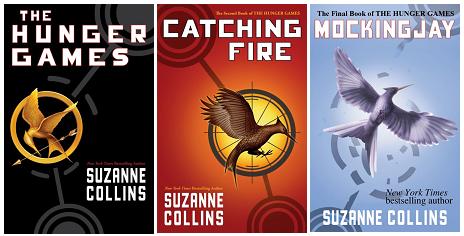
book review: "The Hunger Games" trilogy by Suzanne Collins
THE HUNGER GAMES Trilogy
Suzanne Collins
Sixteen-year-old Katniss Everdeen volunteers in place of her younger sister as District 12's female tribute in the country's hunger games, an annual survival-of-the-fittest, and becomes entangled in a bigger game with higher stakes.
Oft compared to the Japanese film "Battle Royale", the series, composed of three books - "The Hunger Games", "Catching Fire", and "Mockingjay" - goes further than the brutality and horror of "kill or be killed" and focuses on the characters and the world that produced the games. It feels like a coming-of-age story, except the reader knows that Katniss grew up before her time in the name of survival.
The best book in the trilogy for me is "Mockingjay". I think it is the most real of the three books. It shows us that we don't always get what we want. People sometimes come to hate the ones they love. And love does not make our family and friends immune to suffering and death.
Heroes die. Winning the war does not mean that things will immediately become better. It may take years, even generations, for true change to be felt. But as long as there is life, one must not give up.
Rating:
Suzanne Collins
Sixteen-year-old Katniss Everdeen volunteers in place of her younger sister as District 12's female tribute in the country's hunger games, an annual survival-of-the-fittest, and becomes entangled in a bigger game with higher stakes.
Oft compared to the Japanese film "Battle Royale", the series, composed of three books - "The Hunger Games", "Catching Fire", and "Mockingjay" - goes further than the brutality and horror of "kill or be killed" and focuses on the characters and the world that produced the games. It feels like a coming-of-age story, except the reader knows that Katniss grew up before her time in the name of survival.
The best book in the trilogy for me is "Mockingjay". I think it is the most real of the three books. It shows us that we don't always get what we want. People sometimes come to hate the ones they love. And love does not make our family and friends immune to suffering and death.
Heroes die. Winning the war does not mean that things will immediately become better. It may take years, even generations, for true change to be felt. But as long as there is life, one must not give up.
Rating:
Sunday, February 12, 2012
book review: "A Game of Thrones" by George R.R. Martin
A GAME OF THRONES
George R.R. Martin
I like fantasy novels, but I'm the
type of reader who won't touch a "popular" book until the hype has died
down. However, since my book club Flips Flipping Pages will be
discussing "A Game of Thrones" this month, I thought it was time I read
it.
From the beginning of the novel the reader is presented with the challenge of keeping track of the numerous characters and their relationships with each other. Thank God for the appendix at the end. And it seems from the way AGoT is written, from the points-of-view of different characters, that Martin wants his readers to empathize with House Stark. Or it could just be me.
Once King Robert Baratheon arrives at Winterfell, one has a foreboding of terrible times to come, especially after a certain likeable character has an unpleasant "accident". My experience throughout the novel was that of a helpless spectator to a tragedy; you can't keep your eyes off the carnage.
A lot of things happen in the book, but once you reach the end it feels like everything was simply a setup for the rest of the series (of which there are currently 4 books, not including this one, out of a projected 7). Yet you can't help but read the next book in line. And watch the TV series.
Aside: For those who have read Garth Nix's Abhorsen trilogy, the Wall of Westeros reminds me of the Wall between the Old Kingdom and Ancelstierre. Even the supernatural beings (the Others vs. the Dead Hands and Free Magic elementals) feel similar. Coincidence?
Rating:
George R.R. Martin
I like fantasy novels, but I'm the
type of reader who won't touch a "popular" book until the hype has died
down. However, since my book club Flips Flipping Pages will be
discussing "A Game of Thrones" this month, I thought it was time I read
it.From the beginning of the novel the reader is presented with the challenge of keeping track of the numerous characters and their relationships with each other. Thank God for the appendix at the end. And it seems from the way AGoT is written, from the points-of-view of different characters, that Martin wants his readers to empathize with House Stark. Or it could just be me.
Once King Robert Baratheon arrives at Winterfell, one has a foreboding of terrible times to come, especially after a certain likeable character has an unpleasant "accident". My experience throughout the novel was that of a helpless spectator to a tragedy; you can't keep your eyes off the carnage.
A lot of things happen in the book, but once you reach the end it feels like everything was simply a setup for the rest of the series (of which there are currently 4 books, not including this one, out of a projected 7). Yet you can't help but read the next book in line. And watch the TV series.
Aside: For those who have read Garth Nix's Abhorsen trilogy, the Wall of Westeros reminds me of the Wall between the Old Kingdom and Ancelstierre. Even the supernatural beings (the Others vs. the Dead Hands and Free Magic elementals) feel similar. Coincidence?
Rating:
Sunday, January 30, 2011
book review: "Makamisa: The Search for Rizal's Third Novel" by Ambeth R. Ocampo
MAKAMISA: The Search for Rizal's Third Novel
Ambeth R. Ocampo
No Filipino can graduate from school without having read, or at least
pretend to read, the novels of the country's national hero, the Noli me
tangere & the El Filibusterismo. As such, the study of the life of
Jose Rizal & his works have become a burden & a joyless chore.
For anyone to enjoy Ambeth Ocampo's book "Makamisa", one first needs to
have a sincere appreciation of Rizal and his legacy.
In "Makamisa", Ocampo takes us with him on a journey as he searches for & eventually finds Rizal's unfinished third novel. Yes, Rizal had not just one, but six unfinished stories, which I was happy to learn about & read in this book. All these unfinished stories give us a glimpse of the wealth of Rizal's imagination and his unfulfilled potential, sadly cut short by his execution by the Spanish. Thus we are left to forever wonder what else he could have accomplished.
And on this year that we celebrate the 150th anniversary of the birth of our national hero, I hope we can truly say that our interest in Rizal is still alive, because there is still more to learn for those who know to look.
Rating:
Ambeth R. Ocampo
No Filipino can graduate from school without having read, or at least
pretend to read, the novels of the country's national hero, the Noli me
tangere & the El Filibusterismo. As such, the study of the life of
Jose Rizal & his works have become a burden & a joyless chore.
For anyone to enjoy Ambeth Ocampo's book "Makamisa", one first needs to
have a sincere appreciation of Rizal and his legacy.In "Makamisa", Ocampo takes us with him on a journey as he searches for & eventually finds Rizal's unfinished third novel. Yes, Rizal had not just one, but six unfinished stories, which I was happy to learn about & read in this book. All these unfinished stories give us a glimpse of the wealth of Rizal's imagination and his unfulfilled potential, sadly cut short by his execution by the Spanish. Thus we are left to forever wonder what else he could have accomplished.
And on this year that we celebrate the 150th anniversary of the birth of our national hero, I hope we can truly say that our interest in Rizal is still alive, because there is still more to learn for those who know to look.
Rating:
Friday, December 31, 2010
book review: "Selyo: Philippine History in Postage Stamps" by Reynaldo G. Alejandro, et al
SELYO: Philippine History in Postage Stamps
Reynaldo G. Alejandro, Rosa M. Vallejo, Arminda V. Santiago
I love history, and I read history books for pleasure, so when Anvil
Publishing, Inc. gave my book club, Flips Flipping Pages, the
opportunity to sample their books for free in return for a review, I
decided to take the opportunity to indulge in one of my favorite
pastimes. One would think my default choice would have been any work by
Ambeth Ocampo, but when I saw "Selyo" on the publisher's online
inventory, I could not resist it (although I did also get Ocampo's
"Makamisa"). Not only did the book purport to be about history, it would
have pictures too.
"Selyo", as its subtitle states, is about "Philippine History in Postage Stamps". It is a celebration of nationalistic stamps from 1854, the first Philippine and Asian adhesive postage stamp, to 1998, in honor of the centennial not only of Philippine Independence, but of the Philippine Postal System as well.
The book is divided into 4 main chapters - Famous Filipinos, Historical Events, Dr. Jose P. Rizal, and Philippine Centennial - and shows the reader an enlarged image of each stamp along with a smaller image of the stamp in its actual size, with a description of the person or event commemorated. Although of course it would be impossible to include all the people & events in Philippine history that have ever been commemorated on stamp, the authors do a good job in presenting what they had. Not only would philatelists appreciate it, but history buffs like me as well.
Do you know who Ambrosio Bautista is? He was the author of the Declaration of Philippine Independence in 1898, commemorated in a 1981 stamp. Did you know that Filipino women earned the right to vote after a plebiscite in 1937, as commemorated in a stamp 50 years later? These are just a couple of historical nuggets, glossed over in books and classes if discussed at all, that can be discovered throughout the book.
My only gripe with the book is the lack of organization in the first chapter. A stamp with a 16th century sultan is placed next to a 20th century war general next to a 19th century revolutionary. I wish the heroes were arranged in chronological order to maintain the history aspect of the book.
For the insatiably curious, the book also opens further avenues of reading. Who decides who or what to commemorate on a stamp? Who does the art? Who decides the value put on each stamp?
Sadly, with the advent of mobile phones and text messaging and email and chat, the art of letter writing is dying, and with it, stamps and stamp collecting. Stamps are used to commemorate the past, but they may be well on their way to becoming things of the past themselves.
Rating:
Reynaldo G. Alejandro, Rosa M. Vallejo, Arminda V. Santiago
I love history, and I read history books for pleasure, so when Anvil
Publishing, Inc. gave my book club, Flips Flipping Pages, the
opportunity to sample their books for free in return for a review, I
decided to take the opportunity to indulge in one of my favorite
pastimes. One would think my default choice would have been any work by
Ambeth Ocampo, but when I saw "Selyo" on the publisher's online
inventory, I could not resist it (although I did also get Ocampo's
"Makamisa"). Not only did the book purport to be about history, it would
have pictures too."Selyo", as its subtitle states, is about "Philippine History in Postage Stamps". It is a celebration of nationalistic stamps from 1854, the first Philippine and Asian adhesive postage stamp, to 1998, in honor of the centennial not only of Philippine Independence, but of the Philippine Postal System as well.
The book is divided into 4 main chapters - Famous Filipinos, Historical Events, Dr. Jose P. Rizal, and Philippine Centennial - and shows the reader an enlarged image of each stamp along with a smaller image of the stamp in its actual size, with a description of the person or event commemorated. Although of course it would be impossible to include all the people & events in Philippine history that have ever been commemorated on stamp, the authors do a good job in presenting what they had. Not only would philatelists appreciate it, but history buffs like me as well.
Do you know who Ambrosio Bautista is? He was the author of the Declaration of Philippine Independence in 1898, commemorated in a 1981 stamp. Did you know that Filipino women earned the right to vote after a plebiscite in 1937, as commemorated in a stamp 50 years later? These are just a couple of historical nuggets, glossed over in books and classes if discussed at all, that can be discovered throughout the book.
My only gripe with the book is the lack of organization in the first chapter. A stamp with a 16th century sultan is placed next to a 20th century war general next to a 19th century revolutionary. I wish the heroes were arranged in chronological order to maintain the history aspect of the book.
For the insatiably curious, the book also opens further avenues of reading. Who decides who or what to commemorate on a stamp? Who does the art? Who decides the value put on each stamp?
Sadly, with the advent of mobile phones and text messaging and email and chat, the art of letter writing is dying, and with it, stamps and stamp collecting. Stamps are used to commemorate the past, but they may be well on their way to becoming things of the past themselves.
Rating:
Wednesday, December 30, 2009
book review: "Rizal Without the Overcoat" by Ambeth R. Ocampo
RIZAL WITHOUT THE OVERCOAT
Ambeth R. Ocampo
I have wanted to read "Rizal Without the Overcoat" by Ambeth Ocampo
since the beginning of the year, and as Rizal Day was looming nearer I
thought, what better day to read the book than on the anniversary of
Rizal's death, which was today? I almost didn't get to read it though,
for when I went to National Bookstore in SM Manila yesterday I couldn't
find a copy and the store's computer listed it as out of stock. Then as I
believe fate would have it, when I returned to the store a couple of
hours later to get the pen I had engraved, I saw the book displayed at
one of the cashiers and promptly got it.
The main reason I wanted to read the book [the minor one being to read it as part of the Flips Flipping Pages 2009 Diversity Challenge] was because I wanted to give Rizal another chance. Give Rizal another chance at what, you may ask.
Rizal was my childhood hero. I think this was because of the books my parents gave me and which became my favorite books in childhood, illustrated biographies of the young Jose Rizal geared towards the young reader.
Reading Ambeth Ocampo's book I was surprised to learn that he finished high school and college without reading Rizal's novels "Noli Me Tangere" and "El Filibusterismo", for not only did I read them when they were assigned in Filipino class during high school, I enjoyed them. However, when I went to university [the same university which was apparently Rizal's favorite] and took the required Rizal class, I became disillusioned with him, for then I thought him a privileged but spoiled man who didn't care much about the revolution against the Spanish colonizing his country. Now, after reading "Rizal Without the Overcoat", I'm beginning to understand that it was not that Rizal didn't support the revolution, he just didn't think it was the right time for it then.
"Rizal Without the Overcoat" treats its readers to vignettes of Rizal's life. Who would have thought that Rizal ate tuyo for breakfast? I was also happy to learn that Rizal was a bookworm like I am, who would rather starve than not be able to buy books. The book also shows Rizal as a son, a brother, a scholar, an artist, a teacher, and the hero that he is, but I think most importantly, as a human being. Ambeth Ocampo makes me want to [re]discover more, not only about Rizal but our other heroes as well, apart from the dry facts presented in school textbooks.
In the end, the book makes one think of the relevance of Rizal today. Unfortunately, many people think of Rizal Day as a mere non-working holiday, without pausing to reflect on the reason why this date was set aside to honor Jose Rizal.
"... my future, my life, my joys, everything, I have sacrificed for love of her. Whatever my fate may be, I shall die blessing my country and wishing her the dawn of her redemption."
Is there anyone alive now who is be able to say the same?
Rating:
Ambeth R. Ocampo
I have wanted to read "Rizal Without the Overcoat" by Ambeth Ocampo
since the beginning of the year, and as Rizal Day was looming nearer I
thought, what better day to read the book than on the anniversary of
Rizal's death, which was today? I almost didn't get to read it though,
for when I went to National Bookstore in SM Manila yesterday I couldn't
find a copy and the store's computer listed it as out of stock. Then as I
believe fate would have it, when I returned to the store a couple of
hours later to get the pen I had engraved, I saw the book displayed at
one of the cashiers and promptly got it.The main reason I wanted to read the book [the minor one being to read it as part of the Flips Flipping Pages 2009 Diversity Challenge] was because I wanted to give Rizal another chance. Give Rizal another chance at what, you may ask.
Rizal was my childhood hero. I think this was because of the books my parents gave me and which became my favorite books in childhood, illustrated biographies of the young Jose Rizal geared towards the young reader.
"Rizal His Childhood" by Gregorio F. Zaide,
[the only?] one of my young Rizal books that survived the years
Reading Ambeth Ocampo's book I was surprised to learn that he finished high school and college without reading Rizal's novels "Noli Me Tangere" and "El Filibusterismo", for not only did I read them when they were assigned in Filipino class during high school, I enjoyed them. However, when I went to university [the same university which was apparently Rizal's favorite] and took the required Rizal class, I became disillusioned with him, for then I thought him a privileged but spoiled man who didn't care much about the revolution against the Spanish colonizing his country. Now, after reading "Rizal Without the Overcoat", I'm beginning to understand that it was not that Rizal didn't support the revolution, he just didn't think it was the right time for it then.
"Rizal Without the Overcoat" treats its readers to vignettes of Rizal's life. Who would have thought that Rizal ate tuyo for breakfast? I was also happy to learn that Rizal was a bookworm like I am, who would rather starve than not be able to buy books. The book also shows Rizal as a son, a brother, a scholar, an artist, a teacher, and the hero that he is, but I think most importantly, as a human being. Ambeth Ocampo makes me want to [re]discover more, not only about Rizal but our other heroes as well, apart from the dry facts presented in school textbooks.
In the end, the book makes one think of the relevance of Rizal today. Unfortunately, many people think of Rizal Day as a mere non-working holiday, without pausing to reflect on the reason why this date was set aside to honor Jose Rizal.
"... my future, my life, my joys, everything, I have sacrificed for love of her. Whatever my fate may be, I shall die blessing my country and wishing her the dawn of her redemption."
Is there anyone alive now who is be able to say the same?
Rating:
Sunday, July 05, 2009
book review: "The Phantom Tollbooth" by Norton Juster
THE PHANTOM TOLLBOOTH
Norton Juster
Norton Juster takes you on a journey with Milo, an ordinary boy, into
the Kingdom of Wisdom to rescue the Princesses of Sweet Rhyme and Pure
Reason from the demons residing in the Mountains of Ignorance, with the
help of Tock, the ticktickticking Watchdog, the Humbug and other
interesting characters he meets along the way.
A wonderfully witty story for children and adults alike who love adventure and words words words.
Rating:
Norton Juster
Norton Juster takes you on a journey with Milo, an ordinary boy, into
the Kingdom of Wisdom to rescue the Princesses of Sweet Rhyme and Pure
Reason from the demons residing in the Mountains of Ignorance, with the
help of Tock, the ticktickticking Watchdog, the Humbug and other
interesting characters he meets along the way.A wonderfully witty story for children and adults alike who love adventure and words words words.
Rating:
book review: "Humboldt's Cosmos" by Gerard Helferich
HUMBOLDT'S COSMOS
Gerard Helferich
Subtitled "Alexander von Humboldt and the Latin American Journey that Changed the Way We See the World", the book is a mix of science, history, and travel. It's amazing and inspiring to read about how much the scientists of the past, at an early age (in their 30's), were able "discover" as much as they did given the limitations of technology, transportation, and communication during their day.
Rating:
Gerard Helferich
Subtitled "Alexander von Humboldt and the Latin American Journey that Changed the Way We See the World", the book is a mix of science, history, and travel. It's amazing and inspiring to read about how much the scientists of the past, at an early age (in their 30's), were able "discover" as much as they did given the limitations of technology, transportation, and communication during their day.
Rating:
Sunday, February 08, 2009
book review: "The Ghost and the Femme Fatale" by Alice Kimberly
THE GHOST AND THE FEMME FATALE
Alice Kimberly
Book 4 of the Haunted Bookshop Mysteries. Read on the recommendation of
Michelle (will lend it to you next time we meet). First read of 2009(!).
Widow Pen McClure's bookshop is haunted by the ghost of Private Investigator Jack Shepard, who was murdered there more than half a century ago. Together they investigate and solve crimes in a small town in Rhode Island, as in this installment when guests of the town's Film Noir Festival get killed off one by one.
This was an easy read, like reading a young adult or a romance novel, but I found it just okay. I probably would have appreciated it more had I started from Book 1 (sadly, books in the series are unavailable at BookMooch and difficult to chance upon at BookSale). I like the chemistry between main characters Pen and Jack, and the dream travel back to Jack's world of 1940's Manhattan. However, the mystery is just your average run-of-the-mill mystery in which the clue that ties all clues together is revealed only at the end so the reader can't really guess whodunit (unless she's paranoid and suspects everyone).
I wouldn't mind reading more from this series, but I'm not exactly scrambling to get my hands on them ASAP.
Rating:
Alice Kimberly
Book 4 of the Haunted Bookshop Mysteries. Read on the recommendation of
Michelle (will lend it to you next time we meet). First read of 2009(!).Widow Pen McClure's bookshop is haunted by the ghost of Private Investigator Jack Shepard, who was murdered there more than half a century ago. Together they investigate and solve crimes in a small town in Rhode Island, as in this installment when guests of the town's Film Noir Festival get killed off one by one.
This was an easy read, like reading a young adult or a romance novel, but I found it just okay. I probably would have appreciated it more had I started from Book 1 (sadly, books in the series are unavailable at BookMooch and difficult to chance upon at BookSale). I like the chemistry between main characters Pen and Jack, and the dream travel back to Jack's world of 1940's Manhattan. However, the mystery is just your average run-of-the-mill mystery in which the clue that ties all clues together is revealed only at the end so the reader can't really guess whodunit (unless she's paranoid and suspects everyone).
I wouldn't mind reading more from this series, but I'm not exactly scrambling to get my hands on them ASAP.
Rating:
Friday, November 21, 2008
book review: "The Thirteenth Tale" by Diane Setterfield
THE THIRTEENTH TALE
Diane Setterfield
At the heart of this tale is the question, “Who is Vida Winter?” To say more would be to lose the magic of storytelling. Let Ms. Setterfield and Ms. Winter captivate you with a story of the past, a story of love and pain and secrets.
Rating:
Diane Setterfield
At the heart of this tale is the question, “Who is Vida Winter?” To say more would be to lose the magic of storytelling. Let Ms. Setterfield and Ms. Winter captivate you with a story of the past, a story of love and pain and secrets.
Rating:
Wednesday, November 19, 2008
book review: "Perfume: The Story of a Murderer" by Patrick Suskind
PERFUME: The Story of a Murderer
Patrick Suskind
Jean-Baptiste Grenouille was born with a gift – an extraordinary sense
of smell. This enables him to become the greatest, if unrecognized,
perfumer in eighteenth-century France. Yet Grenouille was born without a
smell of his own that would mark him as human. Thus he sought to create
the perfect scent that would make men and women fall on his feet and
worship him – a scent made from virgins on the brink of womanhood.
Patrick Suskind successfully evokes the atmosphere of eighteenth-century Paris by describing the stench of its streets littered with refuse and the odor of its thousands of humans living in close quarters, and he contrasts these with fragrances from the city’s perfumeries that intrigue the reader’s nose – roses and orange blossoms and jasmine and storax… In the middle he places the young Grenouille, eager to experience and catalog in his mind all smells, good and bad, in existence.
Later Grenouille turns this passion into the creation of the perfect scent, regardless of the means needed to achieve it. In doing so he seeks affirmation of his identity and acceptance from the people who in the past ignored him at best and used him for their own ends at worst. He realizes, too late, that his hatred for the same people has surpassed his need for their acceptance, and his success becomes worthless.
Instead of hatred or revulsion, one feels pity for Grenouille and the circumstances that shaped him into what he is. And one is left with a question – Does the need to please the self ultimately stem from the need to please others?
Rating:
Patrick Suskind
Jean-Baptiste Grenouille was born with a gift – an extraordinary sense
of smell. This enables him to become the greatest, if unrecognized,
perfumer in eighteenth-century France. Yet Grenouille was born without a
smell of his own that would mark him as human. Thus he sought to create
the perfect scent that would make men and women fall on his feet and
worship him – a scent made from virgins on the brink of womanhood.Patrick Suskind successfully evokes the atmosphere of eighteenth-century Paris by describing the stench of its streets littered with refuse and the odor of its thousands of humans living in close quarters, and he contrasts these with fragrances from the city’s perfumeries that intrigue the reader’s nose – roses and orange blossoms and jasmine and storax… In the middle he places the young Grenouille, eager to experience and catalog in his mind all smells, good and bad, in existence.
Later Grenouille turns this passion into the creation of the perfect scent, regardless of the means needed to achieve it. In doing so he seeks affirmation of his identity and acceptance from the people who in the past ignored him at best and used him for their own ends at worst. He realizes, too late, that his hatred for the same people has surpassed his need for their acceptance, and his success becomes worthless.
Instead of hatred or revulsion, one feels pity for Grenouille and the circumstances that shaped him into what he is. And one is left with a question – Does the need to please the self ultimately stem from the need to please others?
Rating:
Subscribe to:
Posts (Atom)